Amazonian Tipping Point: Security Implications of Climate Change and Deforestation in the Amazon Rainforest
This note is part of a series produced by the Defence and Climate Observatory dedicated to the tipping points identified by the Intergovernmental Panel on Climate Change (IPCC) (IPCC, 2018; Collins et al., 2019). Following an initial note on the slowing—even the potential collapse—of the Atlantic Meridional Overturning Circulation (AMOC), the present note now turns to the Amazon rainforest and its tipping point.
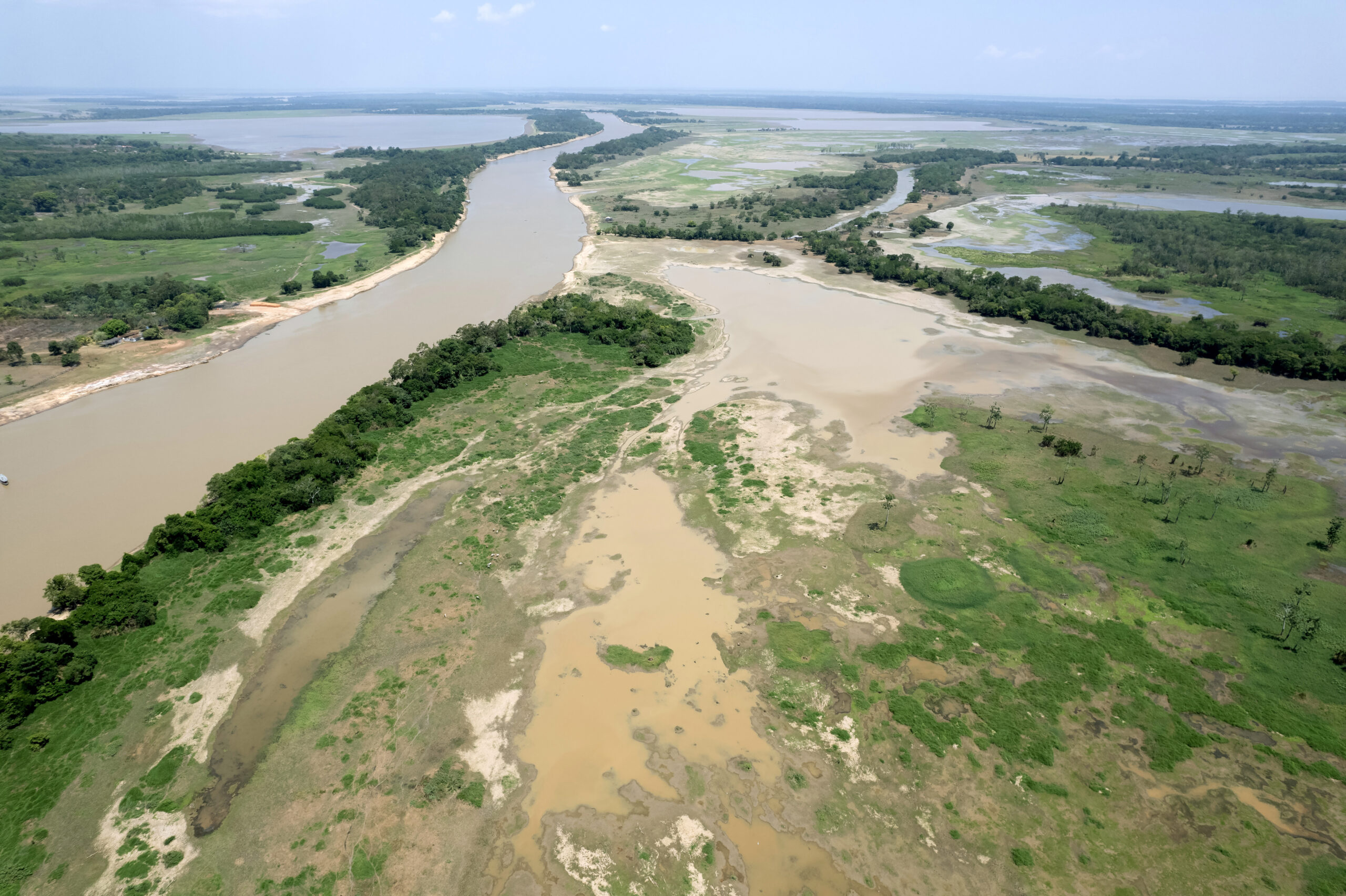
The potential tipping point of the Amazonian biome is often presented as a possible rapid and global transformation of its ecosystems into a state resembling a savanna. Based on current scientific knowledge, however, there remains considerable uncertainty regarding the timing, spatial scale, and type of vegetation into which the biome might shift. The scientific community agrees that, at the current rate of degradation, the Amazon rainforest will experience unprecedented mortality of its ecosystems, leading to a significant reduction in vegetation cover and considerable cascading effects. It is therefore essential that this information be taken into account at both the political and military levels so that appropriate responses can be implemented, both in terms of mitigating the degradation of the Amazon forest and in terms of adapting populations, institutions, and states.
By highlighting the security consequences linked to the degradation of the Amazon rainforest and the risk of crossing its tipping point, this note underscores their impact on human security. The analysis of geopolitical stakes (tensions between ecosystem protection and state sovereignty, as well as internationalization) and the already significant operational (increase in HADR operations and rise in environmental crime) and capability-related (unsuitability of certain equipment and assets) impacts has also demonstrated that the security situation is likely to worsen if these degradations continue.
Map: The Pan-Amazonian Region : Economic Pillar, Ecological Reservoir, Threatened Area
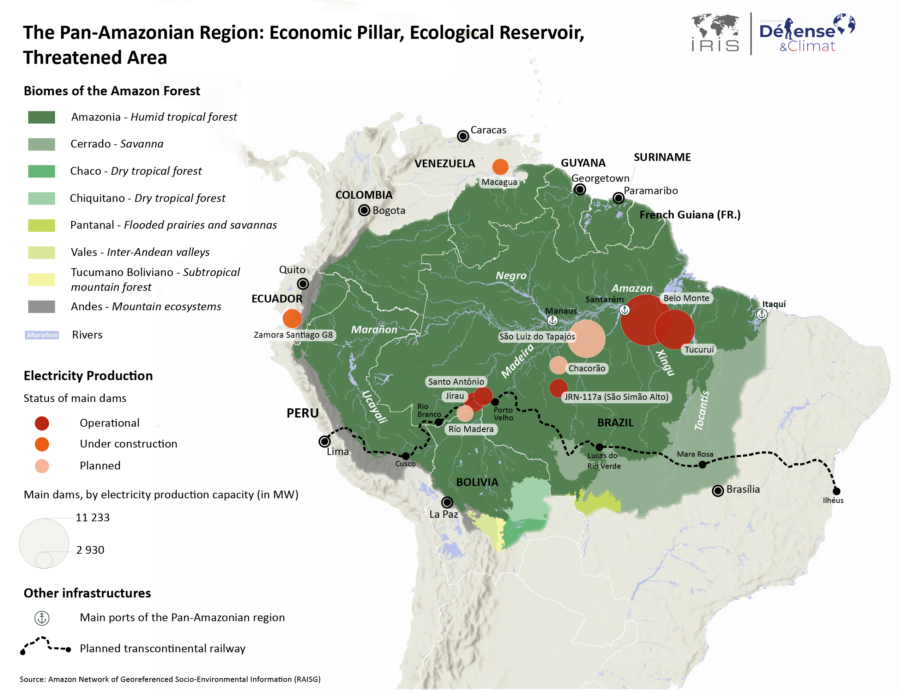
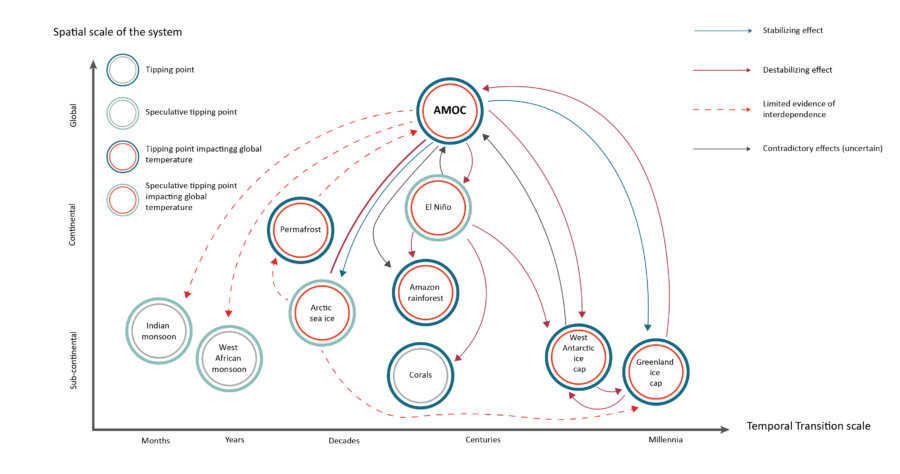
Diagram: Main feedback loops between tipping points