Climate Disinformation and Information Warfare : State Interference and Security Implications
Building on the work carried out by the Defence and Climate Observatory on the integration of climate change into the dynamics of hybrid warfare, this paper aims to analyse the exploitation of climate information by foreign powers, using a multi-factor approach. From this perspective, it incorporates climate issues as a new target of information warfare. Thus, following a presentation of the methodological framework for the climate disinformation–information warfare nexus (I), this paper provides an overview of the main state actors involved in climate disinformation targeting Europe, notably Russia and the United States, as well as their interactions with non-state actors (II). The analysis then examines the security implications of climate disinformation (III). Based on these findings, the paper develops three forward-looking scenarios, accompanied by recommendations for the Ministry of the Armed Forces (IV).
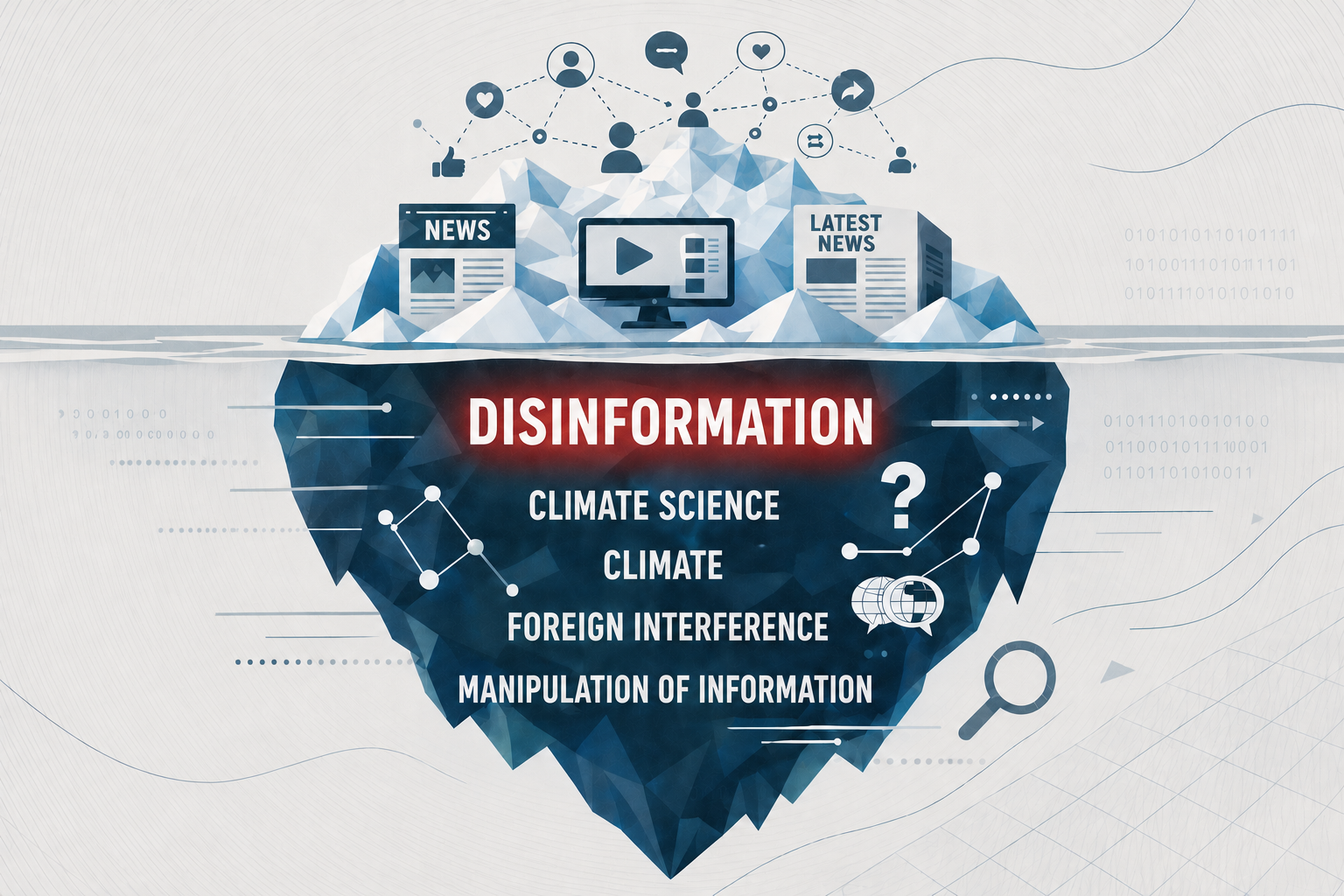
The distinctive feature of information warfare lies in its evolving nature: in order to effectively influence public opinion, it adapts to social and political environments by latching onto issues that attract heightened attention in the targeted societies (Chauvancy, 2025). Like many other issues, climate change can therefore be incorporated into the framework of information warfare.
Although the incorporation of climate issues into foreign information interference is a recent development, the manipulation of climate information is in fact a long-standing practice. However, contemporary climate disinformation is distinguished by the diversity of the actors involved: alongside fossil fuel companies, we now see Big Tech firms and state actors. From 2024 to 2026, climate disinformation accounted for an average of 7.7% of all disinformation content recorded in the European Union (EU).
The manipulation of climate information encompasses a variety of practices, the nuances of which depend on the degree of intent. The EU thus distinguishes between ‘misinformation’ – defined as the ‘dissemination of false or misleading content transmitted without the intention to cause harm, even if its effects may nevertheless be harmful’ – and ‘disinformation’, defined as ‘false or misleading content disseminated with the intention to deceive or for financial gain’.
Figure 1: Informational content continuum
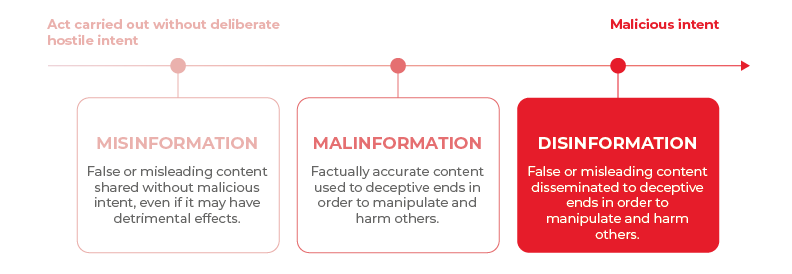
Figure 2: Multifactorial approach to the nexus between climate disinformation and information warfare
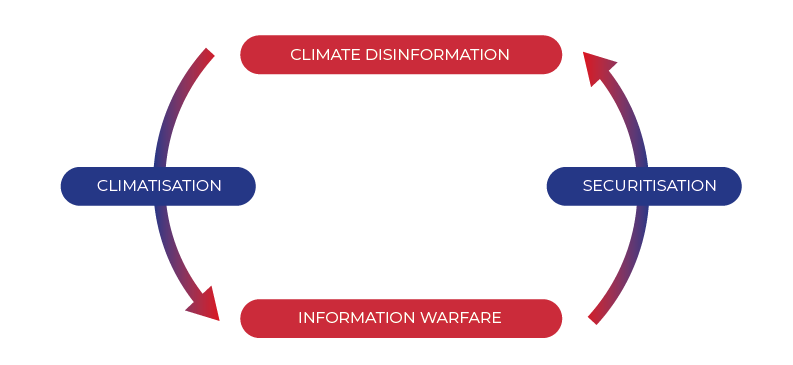
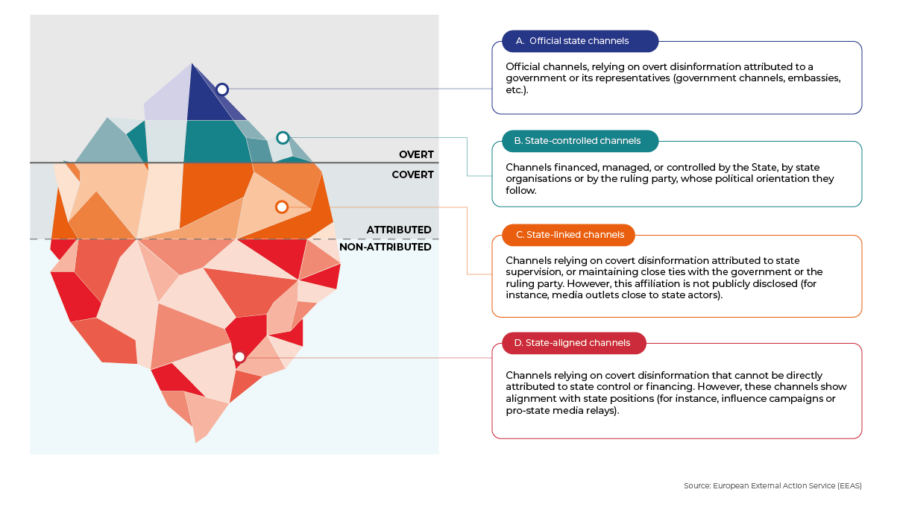
Figure 3: Matrix of the different climate disinformation channels targeting foreign audiences
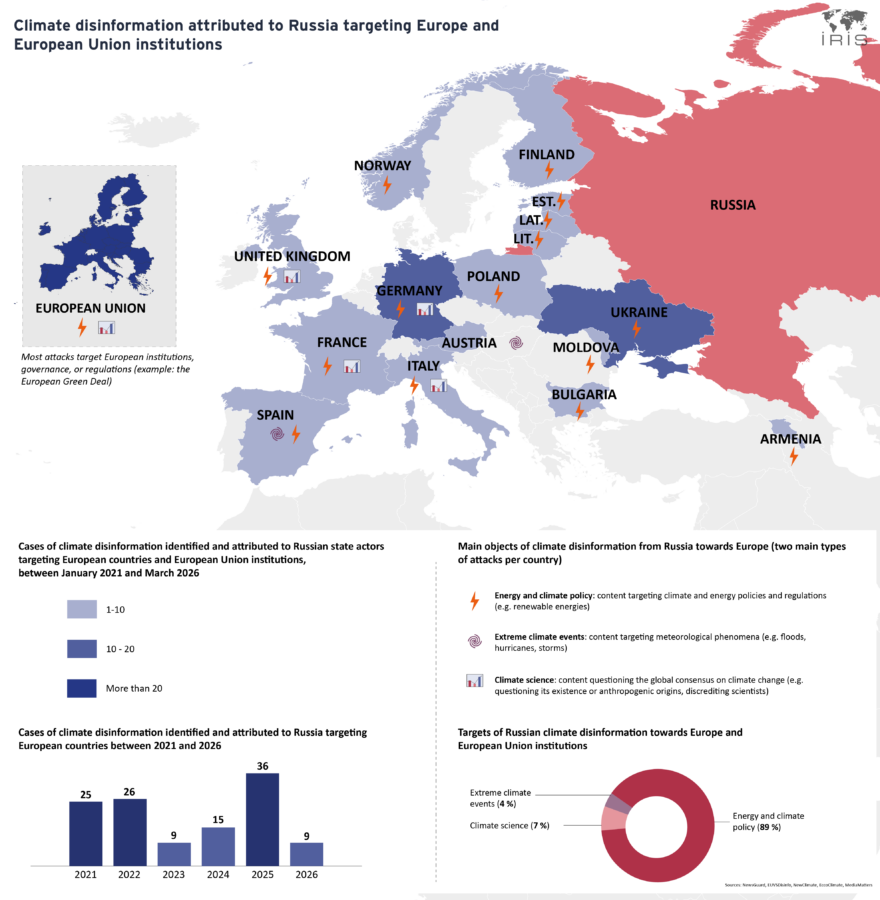
Map: Climate disinformation attributed to Russia targeting Europe and European institutions